
The most dangerous DeFi transaction is not always the one that looks complicated. It may be the ordinary-looking approval, swap, or “claim” that quietly changes what a contract can do later. This is why a wallet’s job cannot stop at displaying balances. A useful wallet must help answer three different questions: what do I own, what will this transaction probably do, and what authority am I giving a smart contract?
Those questions are related, but they are not interchangeable. Portfolio tracking describes the present state of an address. Transaction simulation estimates the effects of a proposed action. Smart contract interaction determines how that action is expressed in code and what permissions may persist afterward. For DeFi users in the United States, where a single wallet can span taxable swaps, liquidity positions, staking contracts, and multiple networks, separating these layers is a practical security discipline rather than a technical luxury.
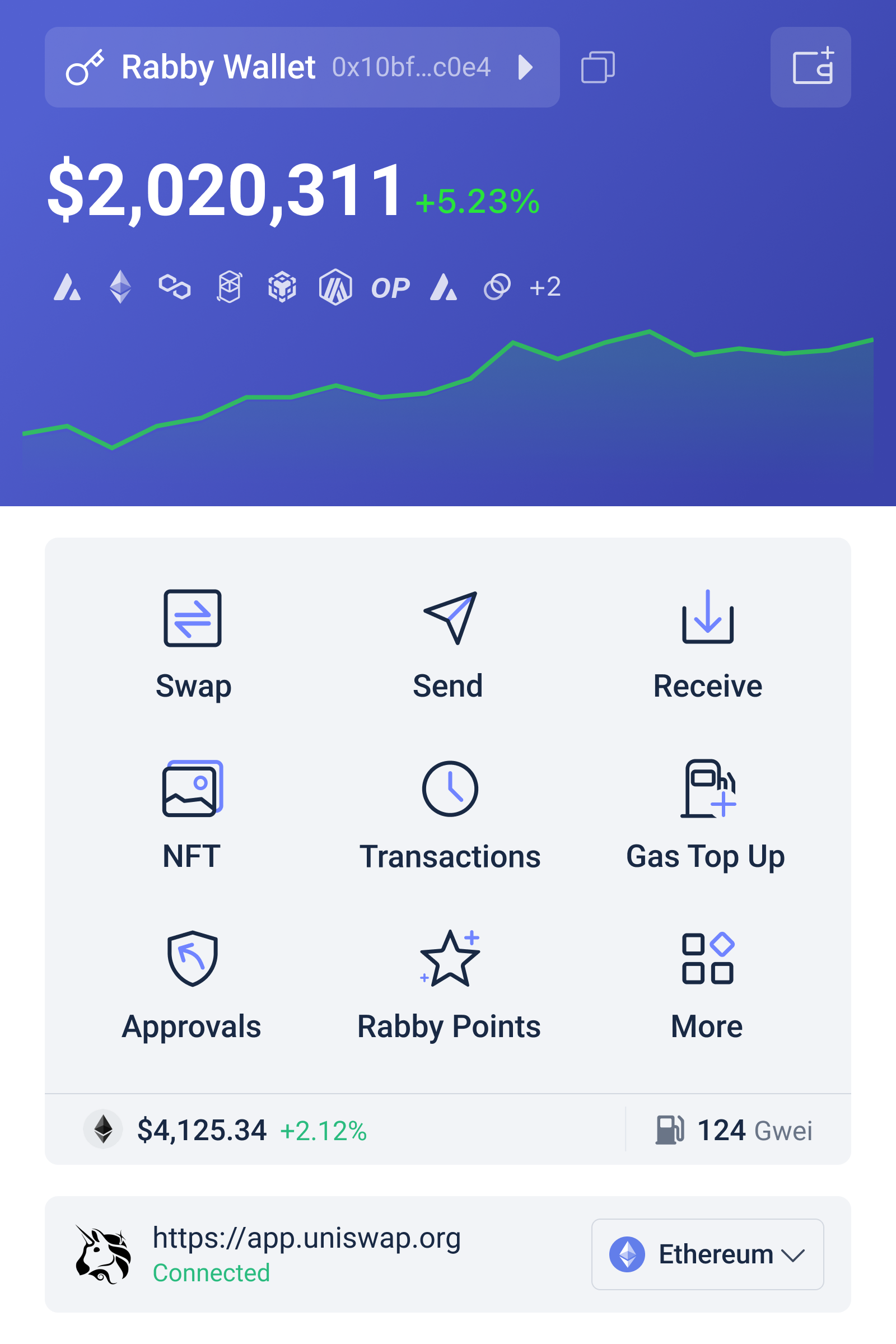
The first misconception: a balance is not a portfolio
A wallet address is often treated as if it were a complete financial account. In reality, it is closer to a collection of on-chain state references. It may hold native tokens, fungible tokens, non-fungible tokens, liquidity-provider positions, lending claims, and permissions granted to other contracts. Some of those positions are easy to display; others require interpreting contract storage, token standards, pricing data, or protocol-specific accounting.
Portfolio tracking is therefore an exercise in reconstruction. A tracker gathers observable blockchain data and turns it into a human-readable view: assets, quantities, networks, approximate values, and sometimes historical activity. This is useful because humans are poor at mentally aggregating dozens of addresses and chains. It can reveal concentration, idle balances, unexpected tokens, and exposure to volatile assets.
But the displayed dollar value is an estimate, not a settlement statement. Prices may come from different markets, thinly traded tokens may have unreliable quotes, and a position represented by a receipt token may not be valued in the same way as the underlying assets. A portfolio screen can also miss the economic meaning of a permission. An address might show a modest balance while retaining a large token allowance granted to a contract.
That distinction produces a non-obvious lesson: portfolio visibility is mainly about state, while wallet security is also about control. What the address owns matters, but what outside contracts are authorized to do may matter just as much. A complete review should ask both, “What is here?” and, “Who can affect it?”
What transaction simulation actually does
A transaction is a proposed state change. Before signing, a wallet can send that proposal to an execution environment that imitates, or “simulates,” how the network may process it. The result can indicate whether the transaction is likely to revert, which assets may leave the wallet, which assets may arrive, and which contract calls or approvals are involved.
This is more informative than reading a hexadecimal data field. Consider a token swap. The user-facing description might say “swap Token A for Token B,” but the underlying transaction may route through several contracts, transfer Token A to a router, and invoke a permission that was granted earlier. A simulation can translate that chain of calls into an expected outcome. For a user, the important question becomes less “Does this function name look familiar?” and more “After execution, what changes in my wallet and what authority remains?”
Simulation also helps with failed transactions. A likely revert can prevent wasted network fees, especially on chains where gas is paid even when contract execution fails. It may expose a missing approval, an expired deadline, an invalid route, or an application state that has changed since the transaction was prepared. In this sense, simulation is both a security aid and a debugging aid.
However, “simulated” does not mean “guaranteed.” The result is conditional on the blockchain state observed when the simulation runs. A price can move, liquidity can change, a competing transaction can be processed first, or a protocol can depend on an external input that changes between simulation and inclusion. Some attacks are also designed to behave differently under simulation, and not every wallet can perfectly interpret every custom contract.
The correct mental model is a weather forecast, not a time machine. A forecast is valuable because it improves a decision under uncertainty; it does not control the atmosphere. Transaction simulation improves the evidence available before signing, but the user still needs to check the recipient, network, token amounts, slippage, and permissions.
Smart contract interaction is an authority problem
Many users focus on the assets being transferred and overlook the permissions created along the way. An approval allows a spender contract to move a specified token on behalf of the wallet, subject to the allowance rules of that token. Some approvals are limited and temporary. Others may be large or effectively unlimited, meaning the permission can remain useful to the spender until it is revoked or consumed.
This is why an approval is not merely a preliminary click before a swap. It is an authorization event. The swap may be safe in the moment, yet the lingering allowance can expand the consequences of a later contract compromise or malicious upgrade. The risk depends on the token standard, the approved spender, the amount, the protocol’s architecture, and whether the permission is still necessary.
Wallet interfaces that decode contract interactions help make this authority visible. Instead of presenting only a contract address and technical method name, they can surface the likely spender, assets affected, expected balance changes, and suspicious or unusual permissions. This does not replace independent judgment. It gives judgment better material to work with.
There is an important trade-off here. More detailed warnings can reduce blind signing, but too many warnings can create alert fatigue. If every routine interaction produces an equally dramatic message, users may learn to dismiss the interface. Effective security design must distinguish between a familiar, limited action and a transaction that transfers assets unexpectedly, grants broad authority, or interacts with an unfamiliar contract.
For advanced users, the practical workflow is to inspect the transaction in layers. First verify the network and the application you intended to use. Next examine the simulated balance changes. Then inspect approvals and other permissions. Finally consider whether the transaction’s economic purpose matches the result. A message that says “claim rewards” should not produce a large outgoing transfer or an unrelated approval without a clear explanation.
How portfolio tracking and simulation complement each other
Tracking and simulation become more useful when treated as a feedback loop. The portfolio view establishes a baseline: current balances, protocol positions, and outstanding exposure. Simulation then estimates how a proposed transaction would alter that baseline. After the transaction is confirmed, tracking shows whether the observed state matches the expected state.
This comparison can reveal problems that a single screen cannot. Suppose a user supplies liquidity and expects to receive a position token. The transaction may succeed, but the apparent token balance may not immediately reflect the economic position in a simple way. Conversely, a transaction may appear to deliver a new token while also leaving the wallet with a broad allowance. Looking at the before-and-after state alongside the simulated result encourages the user to investigate mismatches rather than assume that “success” means “safe.”
For US users, this separation also matters for record keeping. A portfolio tracker may help organize transaction history and approximate values, but it is not automatically a tax ledger. Transfers between a user’s own wallets, swaps, staking activity, liquidity events, airdrops, and wrapped assets can have different tax treatment depending on facts and applicable guidance. The wallet can improve visibility; it cannot determine a taxpayer’s obligations by itself.
A sensible approach is to use the portfolio view for exposure management and the transaction view for decision control. Ask how much of the portfolio is concentrated in one protocol, chain, stablecoin, or governance token. Before acting, ask what changes immediately and what permissions survive. After acting, verify the result on-chain and preserve the transaction record. This is more robust than relying on a single estimated net-worth number.
Where the security model still breaks
No wallet interface can eliminate risks that originate outside the transaction itself. A compromised computer, malicious browser extension, stolen seed phrase, fake website, or social-engineering attack can undermine otherwise careful review. If the signing device is controlled by an attacker, a simulation may be displayed accurately and then replaced before signing, depending on the attack path.
There are also protocol-level risks. A simulation can show what a contract is expected to do without proving that the contract is economically sound, correctly governed, or free of vulnerabilities. Oracle failures, bridge dependencies, upgradeable contracts, liquidity shocks, and administrative privileges may not be obvious from a balance-change summary. Simulation answers a narrow but important question: what is this proposed call likely to do under current conditions? It does not answer whether the entire protocol deserves trust.
Another boundary condition is composability. DeFi transactions often pass through several contracts, and the final result can depend on each one. A warning system may identify a suspicious transfer but have less confidence when a new protocol uses unusual contract patterns or newly deployed code. Novelty is not proof of fraud, yet unfamiliarity should increase the user’s verification burden.
That is the case for using an advanced wallet such as https://rabby-wallet.at/ as an inspection layer rather than treating it as an automatic approval engine. Transaction simulation and security warnings can narrow uncertainty, decode technical actions, and make permissions more legible. The user still needs to verify the website, understand the economic purpose, and decide whether the residual risk is acceptable.
A reusable pre-signing framework
A compact framework can make the process repeatable. Think in terms of identity, effect, authority, and reversibility. Identity asks whether the network, application, recipient, and contract are the ones intended. Effect asks what assets will leave, arrive, or change in value. Authority asks whether the transaction creates or expands an allowance or other permission. Reversibility asks what can be undone if the result is wrong.
The last question is often neglected. A failed swap may be inconvenient but reversible: the user can try again after correcting the parameters. A broad approval may be harder to notice and more consequential because its danger can emerge later. Sending funds to the wrong address is generally irreversible. These actions should not receive the same level of scrutiny merely because they occupy similar space in a wallet window.
When the simulation and the application’s description disagree, stop. Do not resolve the conflict by assuming that the familiar label is correct. Recheck the chain, inspect the contract, and consider using a separate wallet for experimentation or high-risk protocols. Separation of funds is not a substitute for security, but it limits the blast radius when a decision goes wrong.
The next stage of wallet design will likely depend on better context, not simply more warnings. If interfaces can combine portfolio exposure, transaction effects, permission history, and protocol context without overwhelming users, they may help people make more consistent decisions. That outcome is conditional: it depends on reliable data, understandable explanations, and users who treat alerts as evidence rather than as a guarantee.
Frequently Asked Questions
Does transaction simulation guarantee that a DeFi transaction is safe?
No. It estimates execution and likely state changes under particular blockchain conditions. It cannot guarantee future prices, protocol solvency, contract quality, device security, or the absence of an attack that changes the transaction before confirmation. Use it to improve review, not to outsource responsibility.
Why should I care about token approvals if I am only making a swap?
A swap often requires a contract to receive permission to move a token. If that permission is broad or remains active after the swap, the spender may retain the ability to move tokens later, depending on the token and contract behavior. Review the spender and allowance amount, and revoke permissions that are no longer needed when appropriate.
Is portfolio tracking the same as accounting for taxes?
No. Tracking can organize balances, prices, and transaction history, but tax treatment depends on the facts of each activity and current US rules. Use wallet data as an input for records and professional analysis, not as an automatic tax conclusion.
The sharper lesson is simple: a DeFi wallet is not only a key holder or a portfolio display. It is an interpreter between human intent and machine-executed authority. Tracking shows the financial state you have accumulated; simulation helps test the state you are about to create; contract review exposes the permissions that may outlast the click. Security improves when all three are read together, with uncertainty acknowledged rather than hidden.